Inspection
FreeAbout an hour
Depth readings, defect survey under hard light, and a written plan with a micron budget. You keep the report whether or not you book work.
- Paint depth map, every panel
- Defect survey
- Written correction plan
- No obligation
Paint correction and coating. Petaling Jaya.
It only looks fine because you have never seen it under the light.
We inspect under hard light, measure the clear coat, then correct only what the paint can afford to lose.
Sunlight is too diffuse and a workshop strip light is too broad. Both flatter the paint. We inspect with a single hard source held at a shallow angle, which is the only way to see what is actually there.
Automatic car washes and dirty microfibre
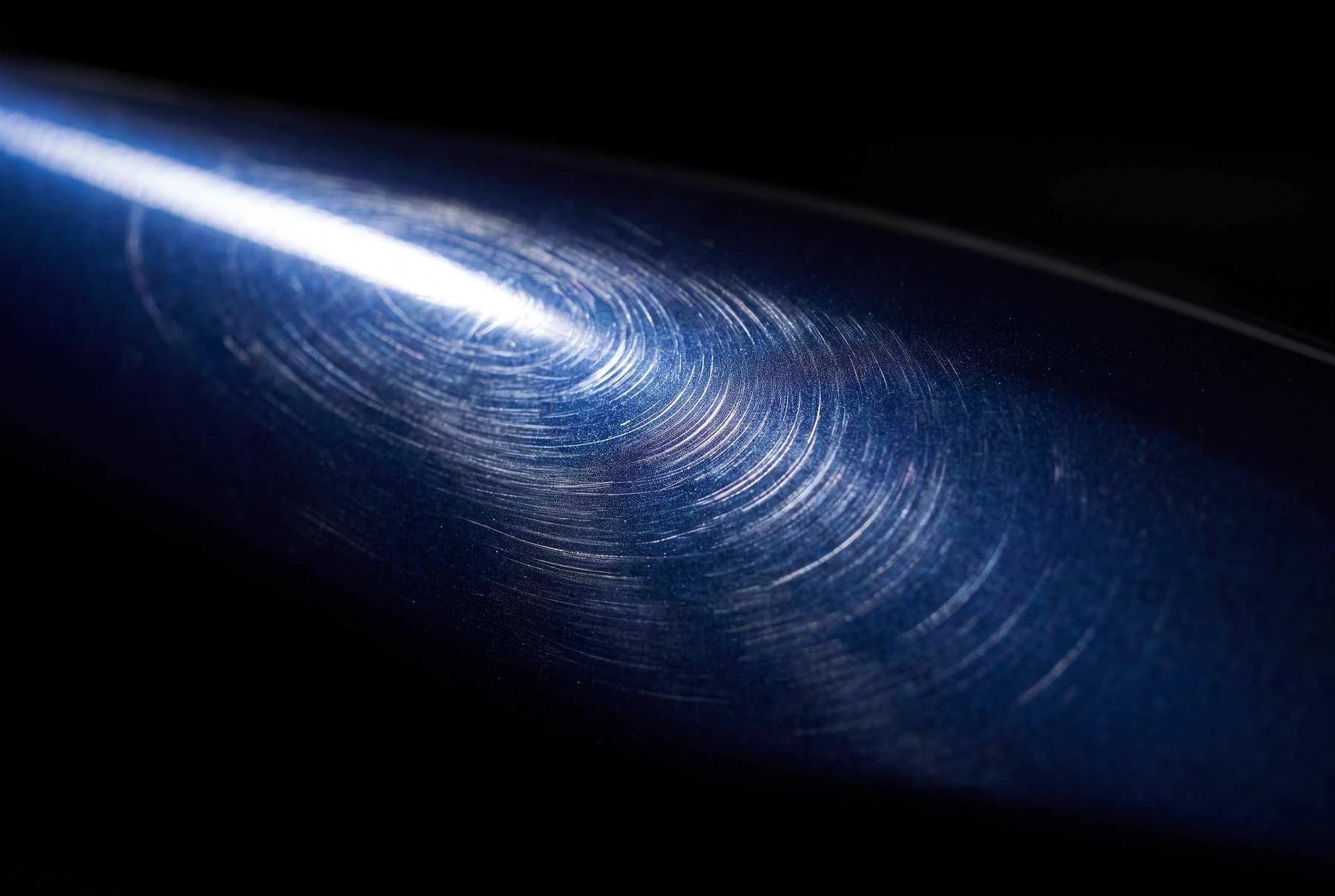
Thousands of fine circular scratches in the clear coat. Invisible in shade, obvious under a single hard light.
A rotary polisher used too fast, usually by someone else
Faint parallel buffer trails that shimmer as you walk past the panel. The most common damage we are asked to undo.
Bird lime, tree sap and rain left to dry in the sun
Acid eats a shallow crater into the clear coat. Beyond a certain depth it cannot be polished out, only reduced.
Factory paint, or a cheap respray
The surface texture of the clear coat itself. Levelling it is possible but expensive in microns, so we discuss it first.
Polishing does not add anything. It removes clear coat until the bottom of a scratch becomes the new surface. A factory clear coat gives you about 45 microns to work with, and a single correction pass spends 3 of them.
A single correction pass removes two to four microns. We budget the whole job before the machine is switched on. That is why the inspection comes before the quote, and why we will sometimes tell you a panel has already been polished as far as it can safely go.
Every panel measured and logged before anything is touched. Brighter panels have more paint left. Pick one to read it.
Porsche 911 997
Inspection, day one
Factory, midnight blue metallic
Readings in microns of total film build. Brighter is more paint. Dashed panels are at or near the floor.
Thin
94µm
Shaded band is the factory range, 100 to 150. The marked value is the safe floor.
Thin. Polished hard at some point before this owner. One light pass only.
This is a real survey layout with sample readings, taken from the car on the work page. Yours would look the same, with your own numbers in it.
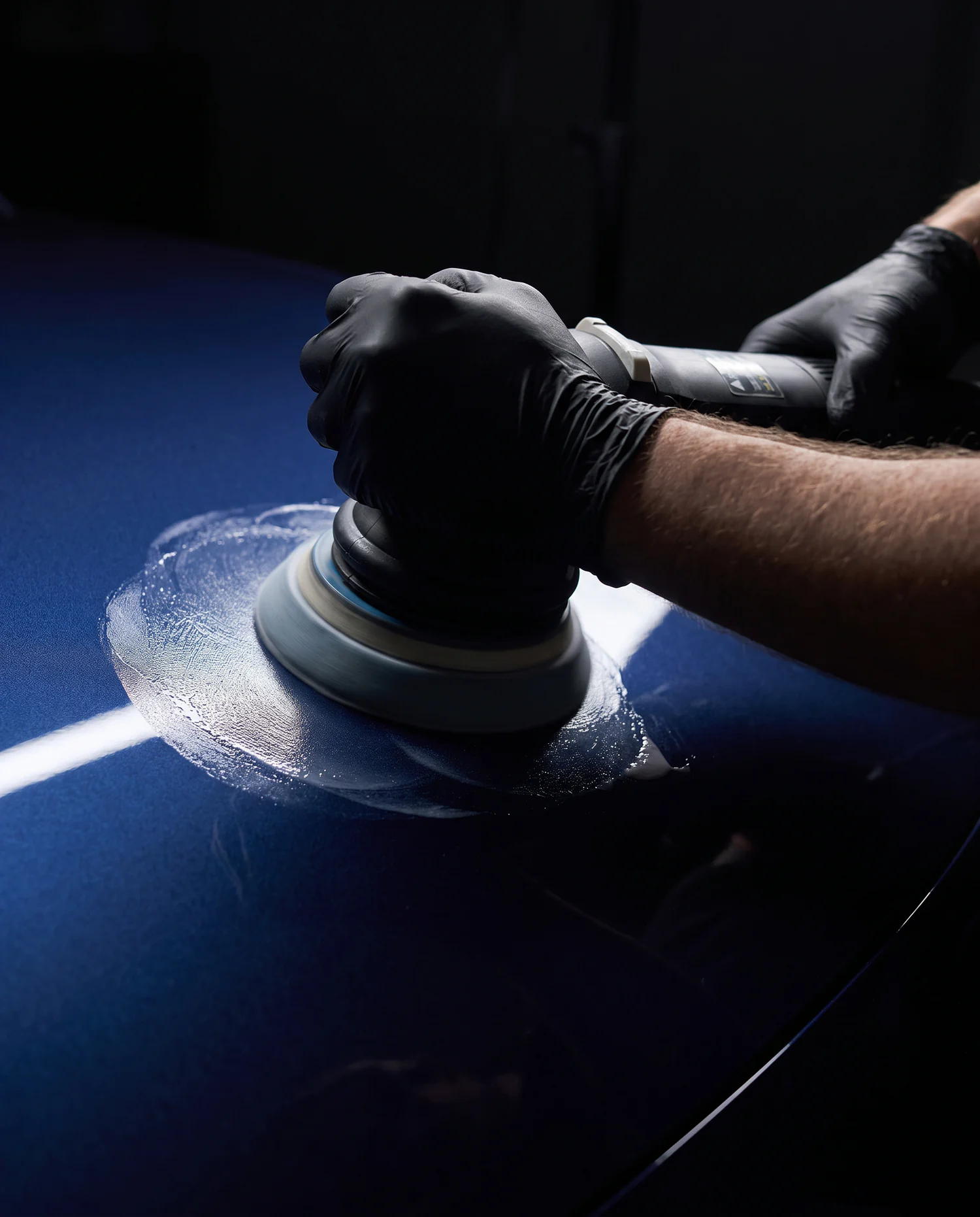
A pass takes about forty minutes per panel, and it cannot be hurried.
Depth readings across every panel, logged. If a panel has already been polished thin, you will see that number before you commit to anything.
Iron fallout, tar and embedded grit come off chemically and with clay. Polishing over contamination just grinds it in.
Machine polishing in stages, from the coarsest cut the paint can afford down to a finishing pass. Checked under the light between every stage.
The jewelling pass. A very soft pad and a fine polish, purely to lift gloss once the defects are already gone.
The coating is transparent. It protects the finish underneath and makes it easier to wash, but it hides nothing, which is why correction comes first.
About an hour
Depth readings, defect survey under hard light, and a written plan with a micron budget. You keep the report whether or not you book work.
One to two days
One correction pass. Removes the majority of light swirl marks and restores most of the gloss on a car that has been reasonably looked after.
Three to five days
Cut, refine and jewel. For neglected paint, hologrammed paint, or a car you intend to keep. This is the work the studio exists for.
Prices are a starting point, not a quote. What a car actually needs is decided by the depth readings, and we put the number in writing after the inspection.
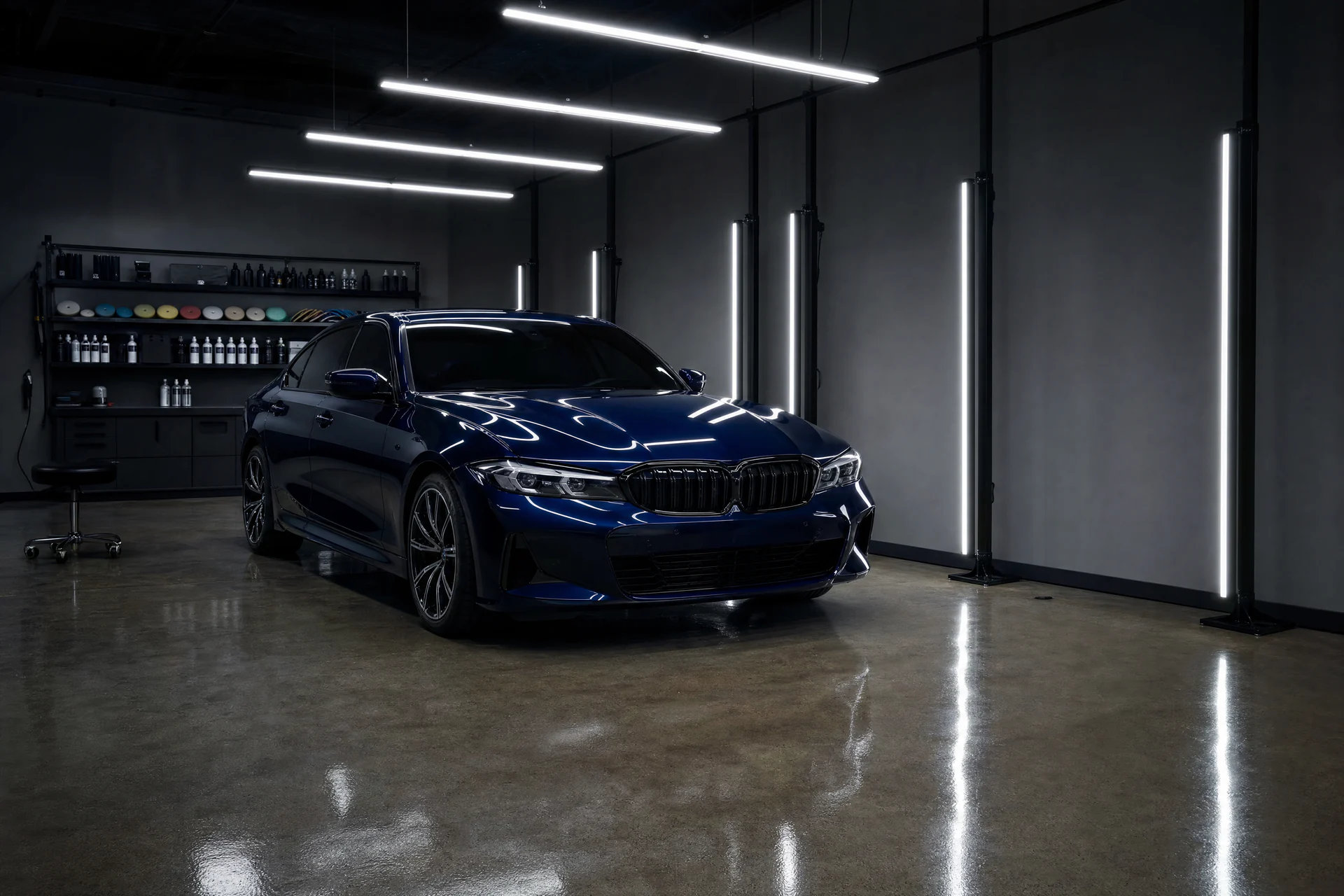
The lighting is the expensive part of this room. Vertical bars down both sides and a run overhead, all at the same colour temperature, so a panel can be checked from any angle without moving the car.
Six cars, six job numbers, and what the owners said once they had seen their own paint under the light.
“I brought it in convinced the paint was fine because it had never been in an accident. The reading said otherwise. Watching the swirl marks show up under that light was the first time I actually understood what fourteen years of car washes does.”
Aidil Farhan, Damansara Perdana
“Every other place quoted a flat price before touching the car. AZ measured first and told me one panel wasn't worth correcting past a certain point. I trusted the estimate more for the ones they talked me out of.”
Melissa Chong, Bandar Utama
“Two bays, one car each, no other job dragging on next to mine. I could see my own car under the light the whole time I waited. Four hours felt honest in a way a same-day detailing package never has.”
Harveen Kaur, Kota Damansara
“Booked through WhatsApp, got the depth numbers in writing before any polishing started, and got the same numbers again after. Nobody has ever shown me the paint on my car as a set of measurements before.”
Nabil Iskandar, Petaling Jaya
“Didn't expect a shop this precise to take a Myvi seriously, but the readings don't care what the badge says. Etching from bird lime on the roof, gone, and they told me straight that the bonnet had been resprayed at some point before I bought it.”
Choong Wei Jian, Seksyen 13, PJ
“Slower than I wanted and exactly as long as they said it would be. The coating write-up alone was more thorough than the paperwork that came with the car.”
Siti Rohana, Mont Kiara
A ceramic coating is transparent and it hardens like glass. It cannot fill a scratch. What it does is amplify whatever is underneath it, which means a coating applied over swirl marks locks in a clearer view of the swirl marks.
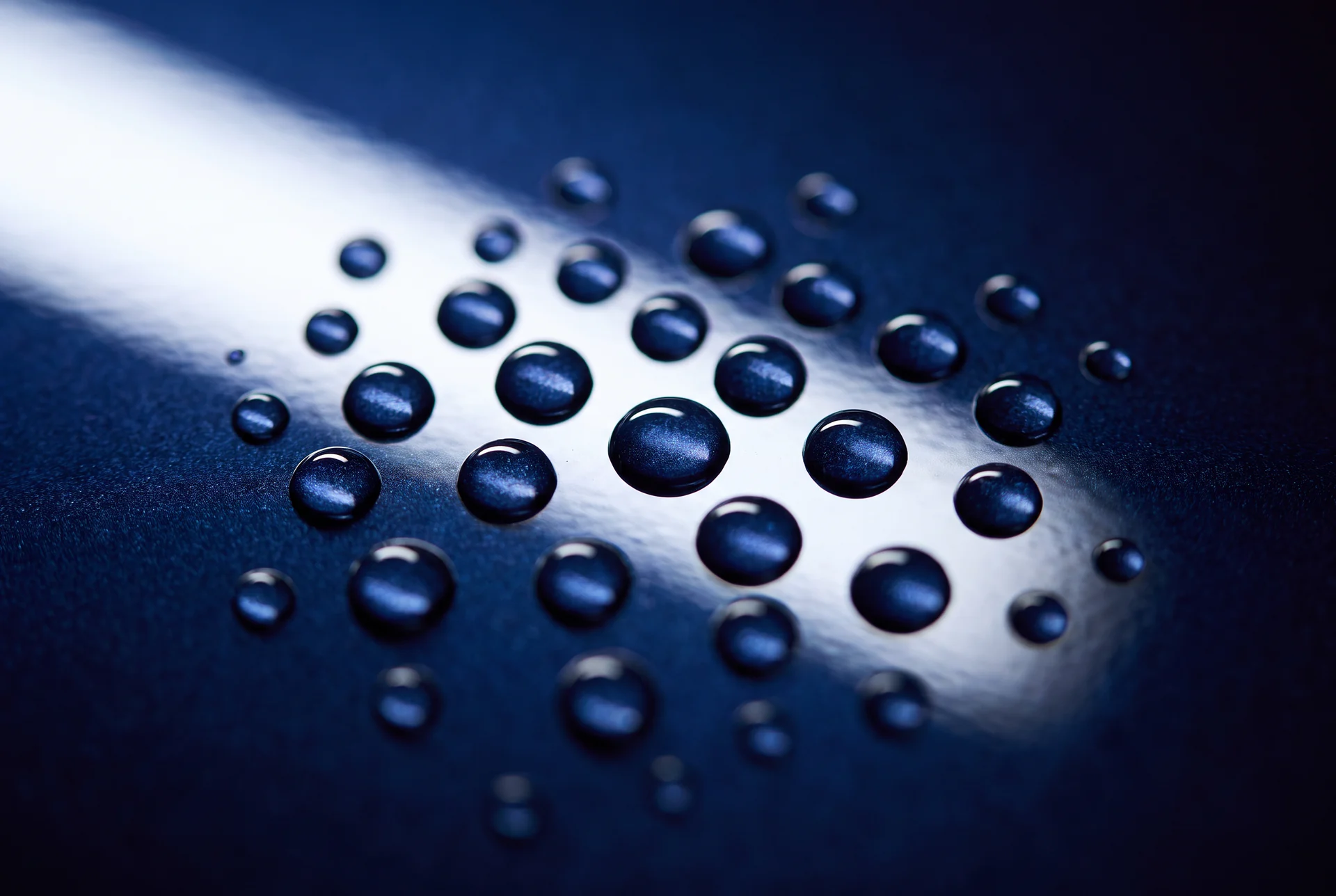
The inspection takes about an hour and costs nothing. You leave with depth readings for every panel and a written plan, whether or not you book the work.